Airbags Deployed After a Crash? What the Repair Plan Should Verify
A calm, vehicle-specific checklist for Los Angeles drivers reviewing airbag, seat-belt, parts, and final-verification details after a collision.
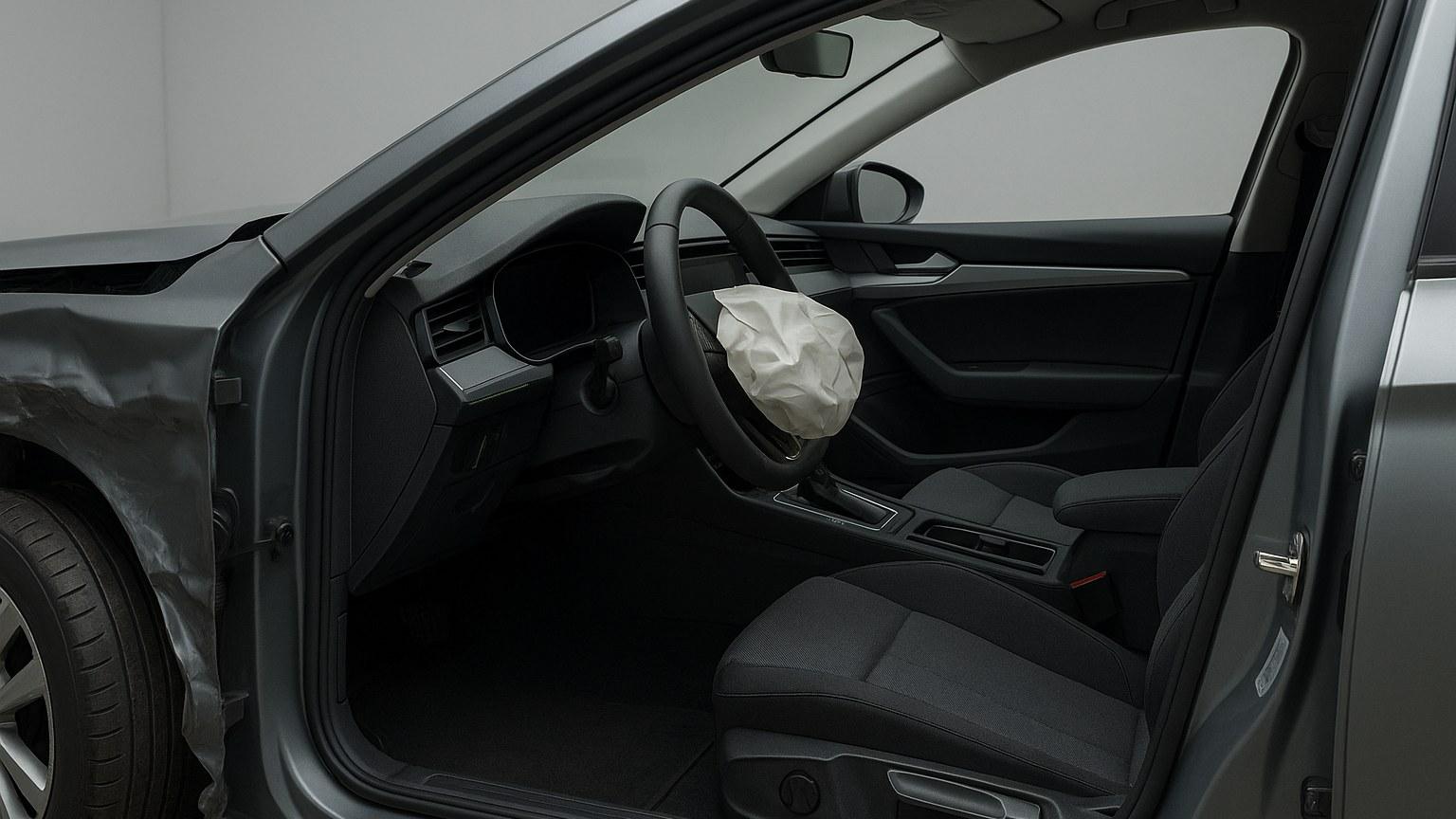
Airbag Deployment Does Not Answer the Whole Repair Question
A deployed airbag is visible evidence that part of the occupant-restraint system responded to a crash. It is not, by itself, a complete damage assessment—and it does not automatically decide whether a vehicle will be repaired or declared a total loss.
Those are two separate questions. The repair plan must identify what the specific vehicle requires after the deployment. The insurer separately evaluates coverage, repair cost, and vehicle value under the policy and claim.
NHTSA explains that airbags are single-use supplemental protection designed to work with seat belts. A deployed airbag must be replaced, but the rest of the restraint-system scope cannot be filled in from a generic checklist. The deployment event, damage evidence, diagnostic results, and current vehicle-maker procedures control.
Start With the Exact Deployment Event
Before comparing estimates, identify what actually activated. A driver airbag, passenger airbag, side airbag, curtain airbag, knee airbag, or seat-belt pretensioner may create a different inspection and replacement path. A warning light alone does not identify that scope, and an undeployed component is not automatically reusable.
The repair planner should document the impact direction, deployed restraints, occupied seating positions when relevant, visible interior damage, warning indicators, and diagnostic trouble codes. That evidence helps connect the crash to the correct procedure research instead of assuming that every component follows the same rule.
Do not remove an airbag cover or dismantle a steering wheel to investigate it yourself. NHTSA specifically directs consumers toward professional inspection when airbag history or replacement is uncertain.
Use Current Vehicle-Maker Procedures, Not a Universal Parts List
Vehicle makers publish model- and event-specific criteria for restraint systems. I-CAR’s repairability guidance notes that those criteria may identify parts that require replacement and others that require inspection after an airbag or seat-belt pretensioner deployment. I-CAR also warns that its summary matrix is not complete and directs repairers to current vehicle-maker technical information.
That means an estimate should not automatically call for every sensor, seat belt, controller, steering component, dashboard part, or wiring section on every vehicle. It also should not omit an item simply because it looks undamaged. Each decision should trace back to the applicable procedure and the condition found on this vehicle.
California’s Bureau of Automotive Repair identifies inflatable restraint systems as an accepted-trade-standards category. BAR also says repairs not specifically covered by an accepted standard must follow manufacturer-recommended procedures to protect structural integrity and safety.
Make the Repair Plan Easy to Audit
A useful repair plan separates confirmed work from work that still depends on inspection, teardown, testing, or procedure research. For each restraint-system line, ask what activated, what evidence supports the operation, and which current procedure applies.
The plan should also explain related interior work. Replacing a deployed module may involve access to trim, seating, a headliner, a dashboard, or steering components, but the necessary operations vary by vehicle and deployment. Clear line items make those relationships easier to understand than one broad “airbag repair” charge.
If additional crash damage is discovered after the initial estimate, California Department of Insurance guidance recognizes that the shop may contact the insurer about added repair cost. The customer still reviews and authorizes the repair; the insurer separately decides coverage and payment.
Ask How Replacement Parts Will Be Identified and Documented
Restraint-system part identity matters. Ask the shop to document the part number, source, and supporting invoice for safety-critical replacements, and to check relevant recalls or restrictions for the specific vehicle and part.
This is not a theoretical paperwork question. NHTSA has warned about dangerous replacement inflators found in vehicles with prior airbag replacement. California BAR also warns that counterfeit airbags and components can be difficult to identify and says California law prohibits installing counterfeit airbags.
A clean history report or VIN recall search does not replace physical and documentary verification when a vehicle has uncertain prior airbag work. NHTSA notes that certain illegally imported replacement inflators may not be connected to the vehicle’s VIN. Do not attempt that inspection yourself; ask a qualified professional to evaluate the history and installed component.
Define the Final Verification Before Work Begins
The estimate should describe how the repaired system will be checked before release. The exact validation steps depend on the vehicle, but the plan may include diagnostic scans, warning-light checks, configuration or programming operations, visual inspection, and confirmation that required restraint-system procedures were completed.
A warning light turning off is useful evidence, not a substitute for the full repair record. Ask what documentation will show the installed parts, completed operations, diagnostic results, and any unresolved condition.
Restraint-system work may also sit beside structural repair, seat or interior work, and driver-assistance calibration. Keep those scopes connected in the overall repair plan without treating one completed scan as proof that every system has been restored.
Seven Questions to Ask Before Authorizing the Repair
Use these questions to make a complicated estimate easier to review:
• Which airbags or pretensioners activated, and how was that documented?
• Which current vehicle-maker procedure applies to this exact year, model, and deployment event?
• Which parts are confirmed for replacement, which require inspection, and which remain uncertain?
• How will each safety-critical replacement part be sourced and traced?
• What damage evidence and applicable vehicle-maker procedures support related trim, steering, seating, wiring, or programming work?
• What additional damage could become visible after teardown, and how will I authorize a revised amount?
• What final diagnostic and documentary checks will be completed before release?
If an answer is generic, ask for the vehicle-specific source. The goal is not the longest estimate. It is a repair plan where each safety-related decision has a documented reason.
Bottom Line for Los Angeles Drivers
After an airbag deployment, separate the total-loss conversation from the technical repair conversation. Vehicle value and documented repair cost affect the economic claim decision. Current procedures, damage evidence, part traceability, and final validation determine whether the restraint-system plan is complete.
Bring the full preliminary estimate, claim documents, and any known repair history to the inspection. MLUX can help organize the repair-side questions, but no shop should promise an insurer outcome or prescribe one universal restraint-system scope before evaluating the specific vehicle.
Frequently Asked Questions
Need a Repair? Start With a Photo Assessment
Share damage photos to start a preliminary assessment. Final repair scope depends on a vehicle-specific inspection.
Collision repair guidance for Los Angeles drivers, with clear repair planning and insurance-documentation support.