Repair Cost vs. Vehicle Value: Why California Cars Become Total Losses
A calm guide to why a low-speed crash can lead to a total-loss decision, which numbers matter, and what Los Angeles drivers should review before choosing the next step.
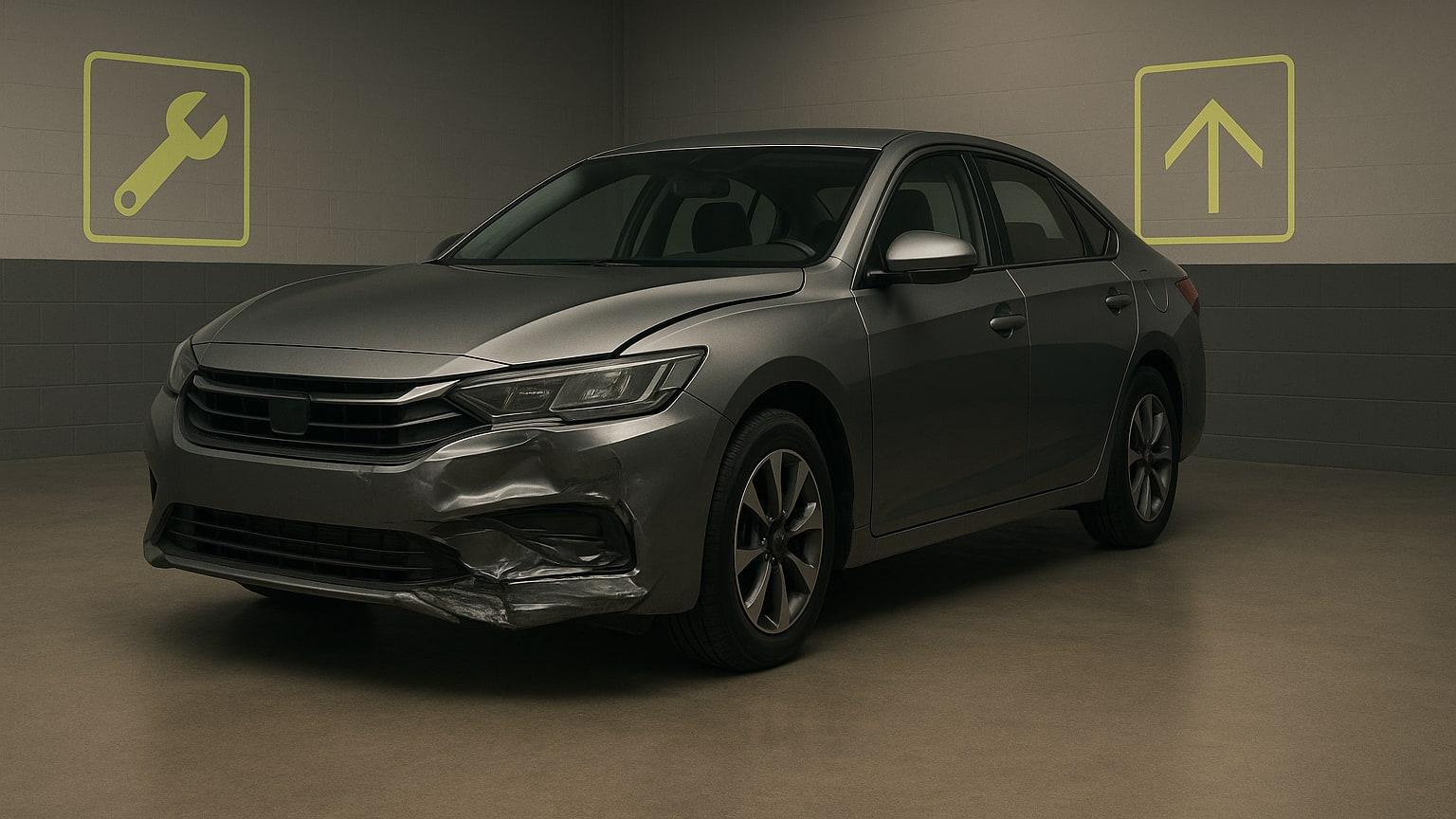
A Small-Looking Crash Can Create a Large Repair Plan
The outside of a vehicle does not show the whole repair. A bumper cover may hide reinforcement, brackets, wiring, lamps, cooling parts, sensors, or damage that becomes visible only after careful disassembly. On a newer vehicle, a low-speed impact can also disturb components tied to driver-assistance systems.
That does not mean every scratched bumper is a total loss. It means the decision should be based on the specific vehicle and documented damage—not on how dramatic the crash looked. The applicable manufacturer procedures, part prices, labor, refinishing, scanning, and calibration requirements can all affect the repair cost.
A proper inspection can move the repair number in either direction. It may confirm that the damage is limited, or it may reveal required work that was missing from a preliminary photo estimate.
The Two Numbers at the Center of the Decision
California Department of Insurance guidance says a standard physical-damage claim generally pays the lesser of the amount needed to repair the vehicle or its actual cash value. Unless the policy defines it differently, California describes actual cash value as fair market value—the amount a knowledgeable buyer and seller would agree to without unusual pressure.
In practice, an insurer compares the documented repair cost with the vehicle’s value and applies its claim guidelines. California DOI consumer material notes that insurer percentages commonly fall in a range rather than one universal statewide cutoff. The policy, claim type, vehicle value, salvage value, and documented repair scope all matter.
This is why two similar-looking crashes can produce different outcomes. The same repair amount may be reasonable on a newer high-value vehicle but uneconomical on an older vehicle with lower market value.
Why the First Estimate May Not Settle the Question
A first estimate may be written from photos or a limited exterior inspection. California DOI guidance recognizes that additional damage can be found during the repair process and that a shop may then contact the insurer about added repair cost.
A more complete repair plan can include hidden parts, one-time-use fasteners, material-specific operations, refinish needs, pre- and post-repair scans, or calibration when the vehicle maker requires it. Those items should be supported by damage evidence and the procedure for that vehicle.
More detail does not automatically save a vehicle from a total-loss decision. A complete estimate may support repair, or the added cost may confirm that a total loss is economically reasonable. The value of a second review is clarity—not a promised reversal.
Review the Valuation Separately From the Repair Scope
There are two different questions to check: Is the repair estimate complete and accurate, and is the vehicle valuation complete and accurate? A body shop can help document damage and repair requirements. The insurer evaluates coverage, the vehicle value, and the claim settlement under the policy and California rules.
For the repair side, ask for an itemized estimate and identify which items are confirmed, which depend on teardown, and which require manufacturer-procedure research. For the value side, ask the insurer for the valuation report and review the year, trim, mileage, options, condition, prior damage adjustments, and comparable vehicles used.
California’s total-loss settlement regulation requires valuation differences and adjustments to be measurable, itemized, documented, and explained. If a number is unclear, ask for the written basis rather than arguing only about the final total.
Five Questions to Ask Before You Agree to the Next Step
Use these questions to separate the repair facts from the settlement decision:
• Is this estimate based on photos, an exterior inspection, or disassembly?
• Which hidden components, sensors, scans, or calibrations still need verification?
• What actual cash value did the insurer use, and can I review the valuation report?
• Were the vehicle’s trim, mileage, options, condition, and prior damage represented correctly?
• If I keep the vehicle, what salvage-title, registration, insurance, and resale consequences should I understand?
California DMV explains that a vehicle declared a total-loss salvage enters a specific certificate process. Owner retention is not just a payout choice; it can change the vehicle’s title and future use. Review that path before accepting it.
What a Collision Shop Can—and Cannot—Do
A collision shop can inspect the damaged areas, build an itemized repair plan, identify where disassembly may be needed, research applicable repair procedures, and provide documentation for the claim. It can also explain why its scope differs from a preliminary estimate.
A shop cannot guarantee that the insurer will reverse a total-loss decision, approve every operation, or pay a particular amount. It also should not treat a repairable appearance as proof that repair is the better financial or safety decision.
MLUX can review the repair side with you and organize the questions to take back to the insurer. For valuation disputes, policy interpretation, salvage-title decisions, or legal advice, use the insurer’s written documents and the appropriate California agency or qualified adviser.
Bottom Line for Los Angeles Drivers
A minor-looking crash can become a total loss when the documented repair cost is high relative to the vehicle’s actual cash value. Modern sensors and hidden damage can affect that calculation, but they are not automatic proof of either repairability or total loss.
Before deciding, review both sides of the equation: the repair scope and the vehicle valuation. Ask for itemized documents, separate confirmed facts from assumptions, and treat a second repair review as a way to improve the evidence—not as a guaranteed claim outcome.
Frequently Asked Questions
Need a Repair? Start With a Photo Assessment
Share damage photos to start a preliminary assessment. Final repair scope depends on a vehicle-specific inspection.
Collision repair guidance for Los Angeles drivers, with clear repair planning and insurance-documentation support.