Do I Have to Use an Insurance Preferred Body Shop in California?
What an insurance preferred body shop and a direct repair program are in California, when you can choose another shop, and what you may owe if the estimates differ.
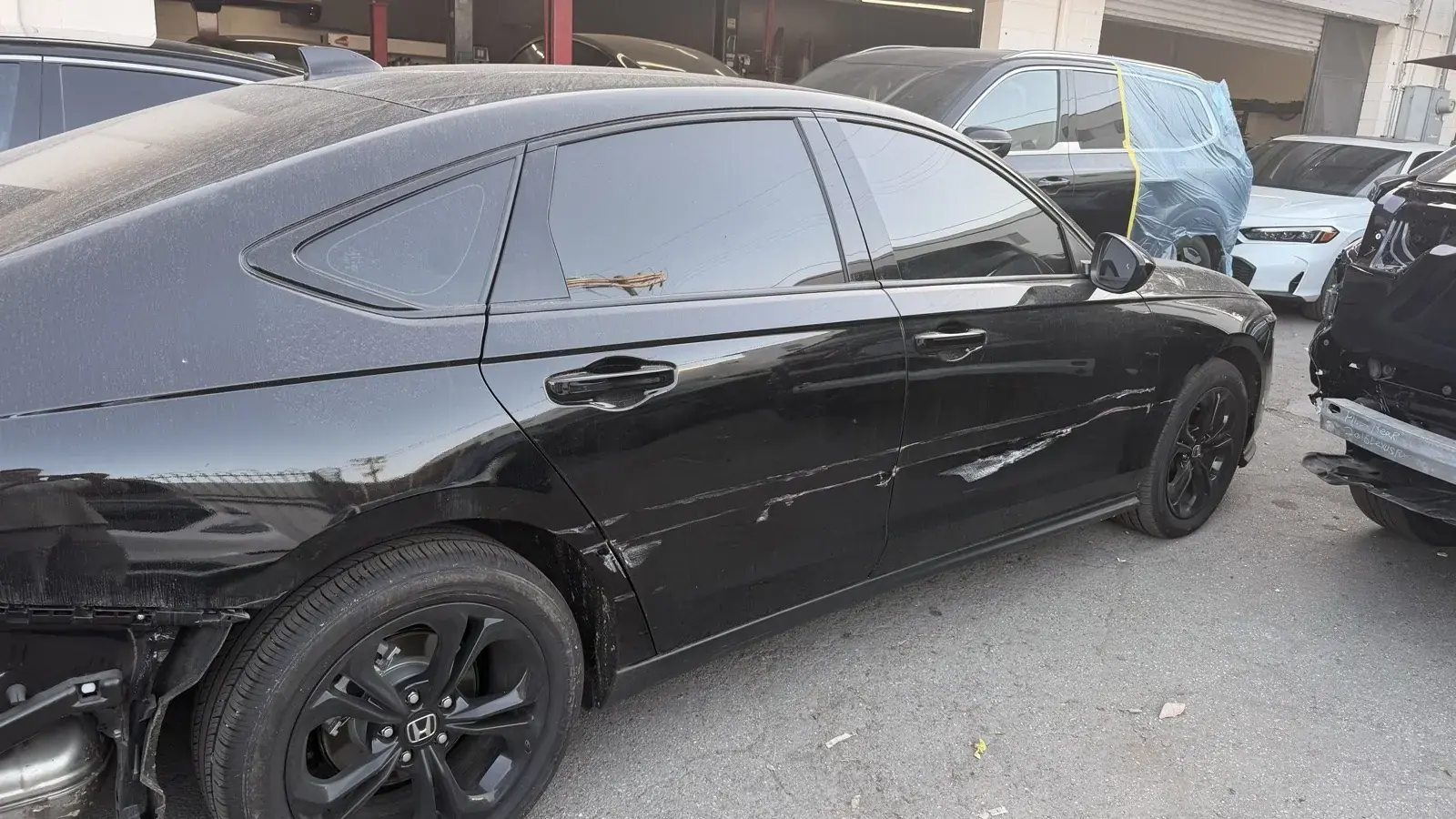
What a Preferred Shop or Direct Repair Program Is
An insurance preferred body shop in California is a repair facility the insurer recommends, usually because the shop participates in that insurer's direct repair program. People shorten the program name to DRP. The recommendation shows up as a phone script, a portal list, or a text that says the claim will move faster at that shop.
California Insurance Code section 758 uses “direct repair program” for a program a registered auto body shop can join, and can be denied. Section 758(a) makes it unlawful for an insurer to require that shop, as a condition of participating, to pay the insured's rental-vehicle cost or the towing charges for that accident. The statute allows a written agreement that those rental charges become the shop's responsibility when the shop does not finish within an agreed repair time. That agreement is between the insurer and the shop. It does not require you to use the shop.
A recommendation can still describe real differences. Section 758.5(b)(2) allows the insurer to give specific truthful and nondeceptive information about services and benefits during the claim. The examples in the statute are repair warranties, the type of replacement parts, the anticipated time to repair, and the quality of the workmanship. A program agreement and a truthful description are not a requirement.
This is general information about California claim rules, not legal advice. Your policy and the insurer's coverage decision control what is paid. A shop does not set that payment.
Choosing a Shop Outside the Network
Insurance Code section 758.5(a) says no insurer shall require that an automobile be repaired at a specific automotive repair dealer. Section 758.5(e) defines a claimant, for this section, as a first-party claimant or insured, or a third-party claimant who asserts a right of recovery for automotive repairs. The same choice applies on your collision claim and on a repair claim against the other driver's insurer.
The California Department of Insurance accident guide, revised December 2024, states the limit in the same terms. An insurance company cannot require that an automobile be repaired at a specific repair shop. Section 758.5(b)(1) says the insurer shall not suggest or recommend a specific automotive repair dealer unless you expressly request a referral, or you have been informed in writing of the right to select the automotive repair dealer.
If you accept the recommendation, section 758.5(b)(3) says the insurer shall cause the damaged vehicle to be restored to its condition prior to the loss at no additional cost to you other than as stated in the policy or as otherwise allowed by law. A deductible the policy already states is one of those policy amounts. The “no additional cost” duty is the duty that attaches when you accept the recommended shop. It is not a penalty that appears because you declined.
When the recommendation was oral and you accept it, the insurer has to give you that information at the time of the recommendation. It must mail or provide a separate written notice within five calendar days after you accept. The statute requires that notice in a freestanding document, plainly printed in at least 10-point type. The required statement says you are entitled to select the auto body repair shop to repair damage covered by the insurer.
After you have chosen a shop, section 758.5(c) says the insurer shall not suggest or recommend a different dealer, except a referral you expressly request, or the kind of truthful, nondeceptive information section 758.5(b)(2) allows. Title 10, section 2695.8(e) is the claim-handling version of the same rule. You have chosen a shop, under section 2695.8(e)(2), when you have told the insurer the specific shop where you want the vehicle repaired. Section 2695.8(e)(5) says that after that choice, the insurer shall not require the inspection at a shop where it has a Direct Repair Program, or at any other shop it identifies.
Section 2695.8(e)(3) bars false, deceptive, or misleading information about the shop you chose. That includes a claim that the shop has a record of poor service or poor repair quality when the statement is untrue, deceptive, or misleading, or should with reasonable care be known to be so. It also includes a poor-quality statement made solely because the shop did or did not participate in a labor rate survey. Section 2695.8(e)(4) says the insurer shall not require you to travel an unreasonable distance, or wait an unreasonable time, to have the automobile repaired at a specific shop. In a city or urban area of 100,000 people or more, the regulation sets that distance at more than 15 miles from where the vehicle is located and made available for inspection. Elsewhere in California it is more than 25 miles.
Choosing the shop does not decide coverage, fault, or the repair price. The insurer still reviews the estimate. A shorter guide covers the choice of shop. Another covers what a later supplement changes on the same claim.
What “You May Owe the Difference” Means
Adjusters sometimes say that leaving the preferred shop means you may owe the difference. That sentence is not a rule that every dollar between the two estimates is yours.
Start with the insurer's own number. Section 2695.8(f) says that when a partial loss is settled on a written estimate prepared by or for the insurer, the insurer must give you a copy. That estimate has to be an amount that will allow repairs in accordance with accepted trade standards for good and workmanlike automotive repairs by an auto body repair shop, including the auto-body standards that section 2695.8(f) incorporates from the Business and Professions Code and 16 CCR 3365. The insurer shall not prepare an estimate that deviates from the standards, costs, or guidelines of the estimating software it used, if that deviation would not allow repairs to those standards.
If you then contend, based on a written estimate you obtain, that necessary repairs will cost more, section 2695.8(f) says the insurer shall do one of three things. It can pay the difference between its written estimate and the higher estimate you obtained. If you ask, it can promptly name at least one repair shop that will make the repairs for the insurer's written amount, and it must cause the vehicle to be restored to its pre-loss condition at no additional cost to you other than as stated in the policy or otherwise allowed by law. Or it can reasonably adjust the written estimate from the shop you chose and give you and that shop a copy. The copy is an edited version of the shop's estimate or a supplemental estimate based on it. The copy must identify each adjustment and the cost of that adjustment.
The Department's accident guide states the payment rule for a shop you choose. The insurance company must pay the reasonable costs of repairs made in accordance with accepted trade standards for good and workmanlike automotive repairs. It is prohibited from limiting or discounting those reasonable repair costs based on charges that would have occurred at the company's recommended repair shop. The guide also says the company must stand behind the repairs of a shop it recommended, if the vehicle is not repaired properly. That sentence is the Department's paraphrase of the duty in section 758.5(b)(3), which applies when you accept the recommendation.
Insurance Code section 758.5(d) is narrower, and it applies when the insurance contract itself suggests or recommends a particular dealer. That insurer must prominently disclose the contractual provision in writing when you apply and when it acknowledges the claim. If you then choose your own shop, section 758.5(d)(2) says the insurer shall not limit or discount the reasonable repair costs based on charges that would have been incurred at the insurer's chosen shop. Read the policy for a contractual recommendation. If the only writing is a suggestion during the claim, ask which rule the adjuster is using: section 758.5(d)(2), the accident guide's reasonable-cost statement, or a line-by-line adjustment under section 2695.8(f).
The amount that can remain with you is work you authorize that the insurer does not agree to pay as a reasonable, necessary repair cost, plus any betterment or depreciation it adjusts in writing, plus any deductible the policy states. Section 2695.8(i) requires the reason for a betterment or depreciation adjustment in the claim file, a dollar amount, and a written explanation. A shop cannot promise that the insurer will pay every line on the first estimate.
Naming the Shop to the Adjuster
Name the shop in writing. Under section 2695.8(e)(2), that specification is the moment you have chosen the shop. After that, a suggestion of a different shop is limited to what section 758.5 still permits.
Ask for the writings the rules already describe, and keep the answers with the claim file:
• Which shop have I named, and on what date?
• If you are recommending a different shop, did I expressly request that referral, or where is the written notice of my right to select the repair dealer?
• If I accepted an oral recommendation, where is the separate notice section 758.5(b)(3) requires within five calendar days?
• Please inspect the vehicle at the shop I named. After that choice, section 2695.8(e)(5) says you shall not require the inspection at a Direct Repair Program shop or at another shop you identify.
• Where is the copy of the estimate prepared by or for you, required by section 2695.8(f)?
• For each dollar you say I may owe, which line did you adjust under section 2695.8(f), and what is the cost of that adjustment?
• Which of those dollars is betterment or depreciation under section 2695.8(i), with the written reason?
If the writing does not arrive, the California Department of Insurance takes claim questions. The consumer hotline in its accident guide is 1-800-927-4357. Its Getting Help page collects the complaint forms. A complaint asks the Department to review the handling. It does not set the repair price, and it does not choose the shop.
Original-Equipment Parts on a Non-Network Estimate
Choosing a shop outside the network does not, by itself, let the insurer refuse an original-equipment part. Section 2695.8(g) says no insurer shall require non-original equipment manufacturer replacement crash parts unless the conditions in that subdivision are met. The parts have to be at least equal to the original equipment manufacturer parts in kind, quality, safety, fit, and performance. The insurer that specifies them must pay for modifications the repair needs, and it must warrant that equality in writing in any estimate prepared by or for the insurer. Disclosure of those parts also has to follow Business and Professions Code section 9875.1, which section 2695.8(g)(5) names.
The Department's accident guide describes the same comparison for aftermarket parts. A non-original part has to be comparable to the original equipment part in kind, quality, safety, fit, and performance. The guide also says the repair invoice has to identify each replaced part as used, reconditioned, rebuilt, aftermarket, or original equipment. Ask the adjuster which lines are original equipment, which are non-original crash parts, and where the written warranty in section 2695.8(g) is.
The insurer can still reasonably adjust a price under section 2695.8(f). Where the insurance contract recommends a shop and you choose another, section 758.5(d)(2) says that adjustment cannot be a discount of reasonable repair costs down to what the insurer's chosen shop would have charged. Ask the adjuster to point to any parts language in the policy. The shop can document the part on the estimate. The insurer still decides the payment.
How MLUX Documents the Repair
MLUX Auto Body is at 1919 S La Cienega Blvd, Los Angeles. The shop can inspect the visible damage, identify the part type on a preliminary estimate, and prepare that estimate for the insurer to review. After teardown, added items are documented as a supplement. The supplement guide explains what that later writing changes. The insurer still decides which lines it will pay.
Deductible assistance is a shop program, separate from what the insurer owes. On a qualifying MLUX repair, a claim over $6,000 can qualify for $500 off the deductible, and a claim over $10,000 can qualify for up to $1,000 off. The assistance is applied after the repairs are completed according to the insurance estimate. It is granted at the shop's discretion, it is not guaranteed, and the amount may vary. The deductible-assistance page states the current terms.
Send photos tonight, get your preliminary estimate the next business day. Once your repair is approved, MLUX provides photo/text updates every 2 business days, plus an estimated finish date. Those updates are the shop's repair communication. They do not decide an insurer's payment. The insurer still decides coverage and the amount. A preliminary estimate is the starting document for an insurance repair. Call (323) 918-5294 or send the photos from the estimate page.
Official Sources
California Department of Insurance, So You've Had an Accident, What's Next? (revised December 2024), the right to choose a repair shop, reasonable repair costs at a shop you choose, recommended-shop repairs, aftermarket parts, the repair invoice, and the consumer hotline: https://www.insurance.ca.gov/01-consumers/105-type/95-guides/01-auto/hadaccident.cfm
California Department of Insurance, Fair Claims Settlement Practices Regulations index: https://www.insurance.ca.gov/01-consumers/130-laws-regs-hearings/05-CCR/fair-claims-regs.cfm
California Department of Insurance, Getting Help, consumer hotline and complaint forms: https://www.insurance.ca.gov/01-consumers/101-help/
10 CCR 2695.8(e), (f), (g), and (i), shop choice, direct repair program inspections, estimate adjustments, non-original crash parts, and betterment: https://www.law.cornell.edu/regulations/california/10-CCR-2695.8
California Insurance Code section 758.5, the right to choose the automotive repair dealer: https://leginfo.legislature.ca.gov/faces/codes_displaySection.xhtml?lawCode=INS§ionNum=758.5.
California Insurance Code section 758, direct repair program participation: https://leginfo.legislature.ca.gov/faces/codes_displaySection.xhtml?lawCode=INS§ionNum=758.
Frequently Asked Questions
Need a Repair? Start With a Photo Assessment
Share damage photos to start a preliminary assessment. Final repair scope depends on a vehicle-specific inspection.
Collision repair guidance for Los Angeles drivers, with clear repair planning and insurance-documentation support.